Best Greyhound Betting Sites – Bet on Greyhounds in 2026
Loading...
The Trainer’s Name Is on the Card for a Reason
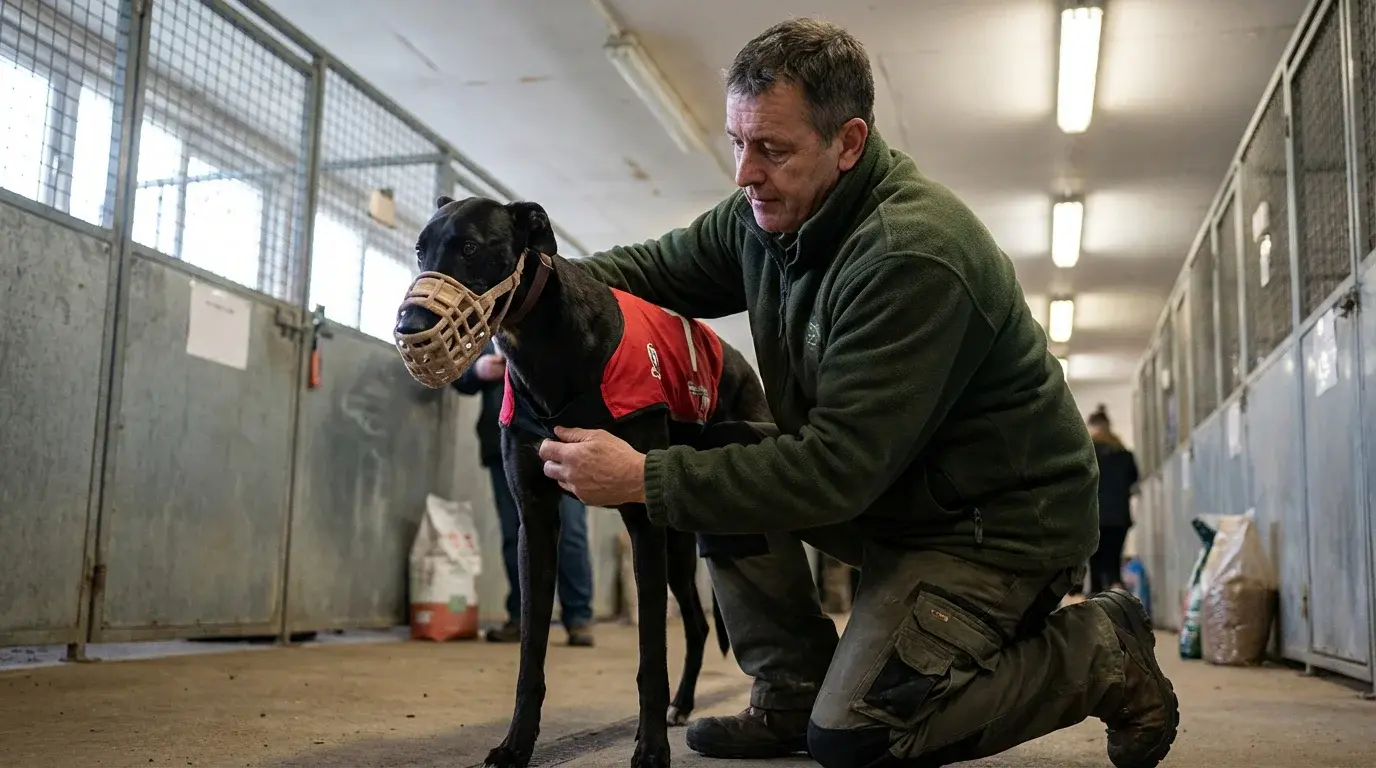
A greyhound’s trainer appears on every racecard, listed alongside the dog’s name, trap number, and recent form. Most bettors notice it and move on, treating the trainer as background information rather than an active factor in their analysis. That is a missed opportunity. The trainer shapes the condition in which the dog arrives at the track, the fitness programme it has followed between races, and the tactical decisions about which races to enter, at which distances, and from which traps.
In horse racing, the trainer’s role is well understood and widely factored into betting decisions. In greyhound racing, it receives less systematic attention — partly because the data is less accessible and partly because the dog’s own form feels more directly relevant than the person who prepared it. But a dog does not train itself. Its diet, exercise regime, trial schedule, and race planning are all determined by the trainer, and those decisions have measurable effects on the result.
This guide explains how trainers influence greyhound performance, how to identify and use kennel form patterns, why track-specific knowledge matters, and how to incorporate trainer analysis into your betting without overcomplicating the process.
How Trainers Influence Performance
The trainer’s most direct influence is on fitness. A greyhound that arrives at the track in peak physical condition — muscled, lean, healthy, and mentally sharp — has a tangible advantage over one that is slightly undertrained, carrying extra weight, or recovering from a minor issue. The difference between peak fitness and 90 per cent fitness may be invisible on the racecard, but it shows itself in the closing stages of a race when one dog maintains its speed and another fades.
Trainers manage this through a combination of galloping schedules, trial runs, nutrition, and veterinary oversight. The best trainers develop an intuitive sense for when a dog is ready to race at its best and when it needs more time. They know when to push and when to ease off. Dogs from these kennels tend to run closer to their ability more consistently, producing form figures that are more reliable as a guide to future performance.
Race selection is another area of trainer influence. The trainer decides which meetings to enter a dog at, which distances to target, and how frequently to race. A dog entered in a race that suits its distance preference and running style is more likely to perform well than one shoehorned into an unsuitable contest because the trainer needed to fill a slot. Some trainers are conservative in their race planning, entering dogs only in races that suit their profile. Others are more aggressive, running dogs frequently across multiple meetings to maximise prize money and owner returns.
Trainers also influence trap draw outcomes indirectly. While trap allocation is handled by the racing manager at each track, trainers can request specific traps or distances for upcoming meetings. A good trainer ensures that a dog known to be a railer is entered in races where it is likely to draw an inside trap, or that a wide runner gets opportunities from the outside boxes. Not every request is granted, but the trainer who actively manages entries is giving their dogs a better chance than one who accepts whatever the schedule offers.
Finally, trainers handle the logistics of getting dogs to the track in the right condition — transported without stress, kenneled appropriately, warmed up correctly, and presented at the traps calm and focused. These operational details are invisible in the results but contribute to the overall package that produces a performance.
Kennel Form: Reading the Trainer’s Current Run
Kennel form — the collective recent results of all dogs trained by a particular trainer — is a useful indicator of the trainer’s current operational effectiveness. When a kennel is in form, multiple dogs from that trainer perform well across the same meeting or the same week. When a kennel goes through a cold spell, the reverse is true — dogs that should be competitive underperform across the board.
These patterns can be driven by several factors. A health issue affecting the kennel — a virus circulating among the dogs, a change in feed supplier, or a disruption to training routines — can suppress performance across all the trainer’s runners simultaneously. Conversely, a trainer who has recently upgraded their facilities, hired a new assistant, or returned from a quiet spell with renewed focus may see a broad improvement across their string.
Tracking kennel form requires looking beyond the individual dog and examining whether the trainer’s other runners are performing above or below expectations. If three dogs from the same kennel have all finished behind their expected positions at the same meeting, the kennel may be going through a difficult patch. If the same trainer has produced three winners from five runners across the last two evenings, the kennel is firing and any dog from that operation deserves extra attention.
Some racecard services and form databases allow you to filter results by trainer, making it straightforward to check a kennel’s recent strike rate. Where this data is not readily available, manually scanning the results from the last few meetings at the relevant track and noting which trainers are producing winners is a worthwhile exercise. Over time, you develop a feel for which kennels are in form at any given point in the season.
Kennel form is a supporting factor, not a primary one. A dog with poor individual form does not become a good bet simply because other dogs in its kennel are winning. But when you have two closely matched dogs and one comes from a kennel that is currently running hot while the other comes from one that is struggling, the kennel form tilts the balance in a way that pure individual analysis cannot capture.
Track Specialisms and Venue Knowledge
Most UK greyhound trainers are registered at one or two tracks and run the majority of their dogs at those venues. This creates track-specific expertise. A trainer who has operated at Romford for fifteen years knows the track surface, the trap biases, the going variations, and the grading tendencies of the racing manager better than a trainer whose dogs are visiting for the first time.
This local knowledge manifests in race selection and preparation. A resident trainer knows that the 225-metre sprint at their track suits a particular type of dog, or that the middle-distance trip plays differently depending on the going. They know how the racing manager grades dogs moving between classes and can time a step-up or step-down to maximise their runner’s chances. This accumulated expertise is a genuine advantage that is difficult for visiting trainers to replicate.
Some trainers develop reputations as specialists in certain race types. One trainer might have a consistently strong record with sprint dogs, producing fast trap-breakers that dominate the short distances at their home track. Another might excel with stayers, conditioning dogs to maintain speed over the longer trips. These specialisms are worth noting because they indicate not just the trainer’s preference but their competence — they have developed a method that works for a specific type of racing and applied it successfully over time.
When a dog transfers to a new track, the trainer factor becomes particularly relevant. A dog arriving at a track where its new trainer has a strong record is more likely to settle and perform quickly than one joining a kennel with little history at the venue. The trainer’s ability to manage the transition — trialling the dog, assessing its running style on the new surface, adjusting its preparation — directly affects how quickly the dog competes at its true level.
Factoring Trainers Into Your Selections
The practical approach to using trainer information is to treat it as a secondary filter that adjusts your assessment after you have completed the primary form analysis. Start with the dog — its recent results, times, trap draw, going preferences, and grade. Then ask whether the trainer factor supports or weakens your conclusion.
A strong form assessment on a dog from a kennel that is currently in good form reinforces the selection. A strong form assessment on a dog from a struggling kennel introduces a note of caution — the individual form says one thing, the broader context says another. Neither factor overrides the other, but together they produce a more nuanced view than either could alone.
Track the trainers at the venues you bet on most regularly. Over a few weeks, you will identify which kennels are producing consistent results and which are going through quiet spells. This awareness takes minutes to maintain once established and provides a layer of context that most casual bettors do not access.
In open races and major competitions, where all six dogs are competitive on form, the trainer’s reputation and track record at the specific venue can be the deciding factor. A trainer who has won the same race three times in the last five years knows something about how to prepare for it. That institutional knowledge is invisible on the racecard but visible in the results over time.
The Hand Behind the Hound
A greyhound runs on instinct. It chases the hare, navigates the bends, and either gets to the line first or it does not. But the condition it carries into the race — its fitness, its sharpness, its readiness to compete — is shaped by the human who trained it. The trainer is the invisible variable on the racecard, present in every result but acknowledged in few betting decisions.
Incorporating trainer analysis does not require complex databases or statistical models. It requires awareness: noting which kennels are running well, recognising the trainers who consistently produce results at your chosen tracks, and using that knowledge to refine selections that form analysis alone has narrowed but not resolved. The trainer’s name is on the card for a reason. The bettors who read it are working with a fuller picture than those who skip past it.