 Available in US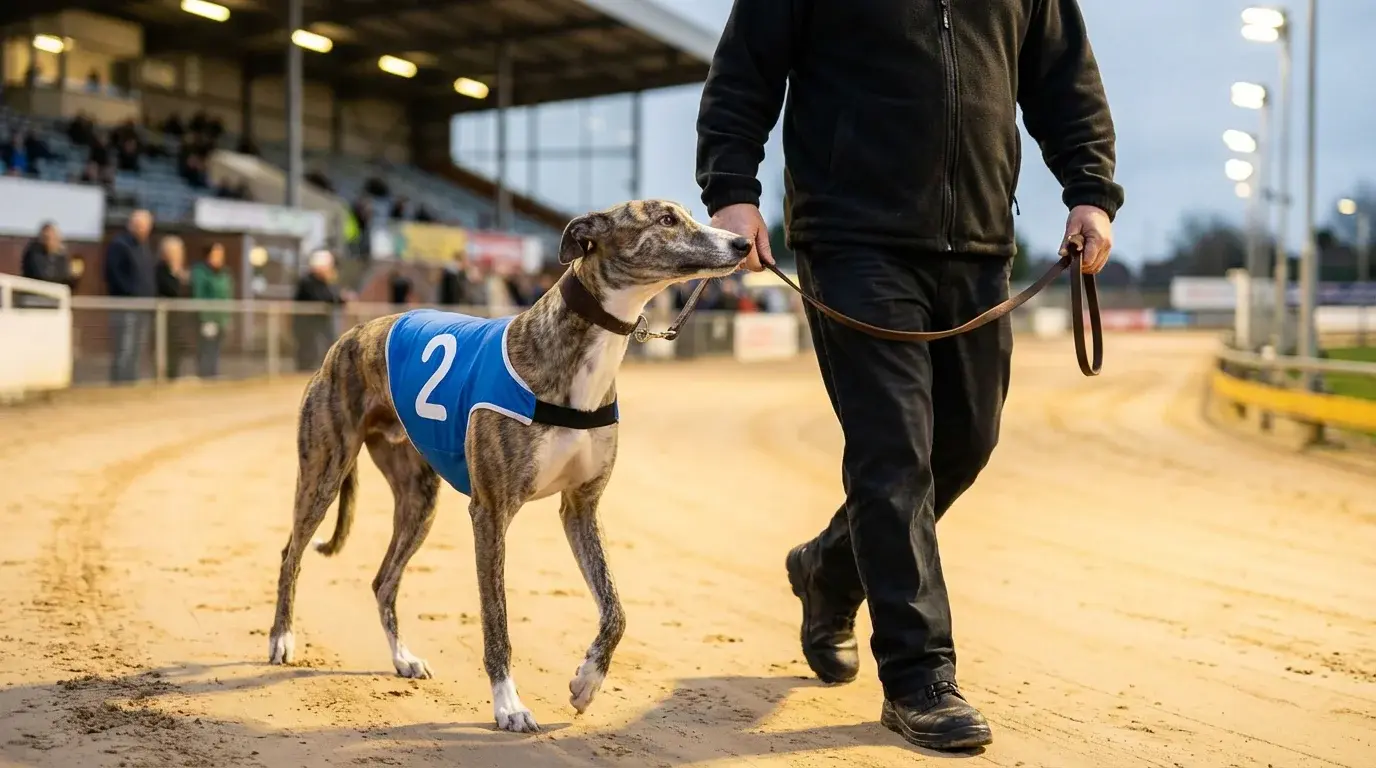
Less Form Means More Uncertainty — and More Opportunity
Most greyhound betting analysis relies on form — a record of recent results that tells you how a dog has performed, under what conditions, and against what quality of opposition. Puppy and maiden races strip away that foundation. The dogs are either very young, very inexperienced, or both. Their form books are thin, their running styles are still developing, and the usual analytical frameworks have less to work with.
For many bettors, this is a reason to avoid puppy and maiden races entirely. The uncertainty is higher, the form is less reliable, and the outcomes feel closer to guesswork than analysis. That reaction is understandable, but it overlooks an important dynamic: where there is uncertainty, there is mispricing, and where there is mispricing, there is value for bettors who know what to look for.
This guide explains how puppy and maiden races work in UK greyhound racing, what challenges they present for bettors, and what form clues — however limited — can be extracted from the sparse data available. The goal is not to make these races as predictable as graded events. It is to identify the situations where an informed assessment has an advantage over the market’s best guess.
Puppy Race Rules and Structure
Puppy races in UK greyhound racing are restricted to young dogs, typically those under a specified age — usually 24 months at the time of the race, though the exact cut-off can vary by competition. These races exist to give developing dogs race experience in a less demanding competitive environment before they move into the main graded racing programme.
The dogs in puppy races are physically and mentally immature compared to their graded elders. They may not have reached their full racing weight, their muscles are still developing, and their racing instincts — how to break from the traps, how to negotiate bends in traffic, how to sustain effort through a full race — are in the early stages of formation. This immaturity creates inconsistency. A puppy that wins its first two starts by clear margins might finish last in its third outing because it encountered traffic for the first time and did not know how to handle it.
Puppy races are typically run at the same tracks and over the same distances as adult races, but the fields are restricted to age-eligible dogs. This means the quality range within a puppy race can be enormous. One runner might be a prodigiously talented youngster destined for open grade racing within months. Another might be a modest dog that will settle into the lower grades. The racecard does not always make the difference clear, because neither dog has enough form to establish its level.
Trainers with strong puppy programmes are worth noting. Some kennels specialise in developing young dogs and have a consistently higher strike rate in puppy events than in graded racing. These trainers know how to prepare a young dog for the specific demands of its first few races — getting the fitness right, choosing appropriate distances, and managing the dog’s introduction to race-night conditions. A trainer’s puppy race record, tracked over several months, is one of the more reliable signals available in this thin-form environment.
Maiden Events: Racing Without a Win
A maiden race is a race restricted to dogs that have never won a race. The term applies regardless of age — a maiden can be a puppy on its debut or an older dog that has raced ten times without winning. The common thread is the absence of a victory, which shapes both the competitive level of the race and the betting market around it.
Maiden races serve a grading purpose. They allow dogs to compete against others at a similar level of achievement, preventing inexperienced runners from being thrown into races against proven winners. Once a dog wins a maiden race, it exits the maiden category and enters the graded system, where it competes based on its ability rather than its win record.
The dynamics of a maiden race are distinct. Some runners are genuinely winless because they lack the ability to beat graded competition. Others are winless for circumstantial reasons — they have been unlucky in running, drawn poorly, or simply not had enough opportunities. The challenge for bettors is distinguishing between the two. A dog that has finished second four times from six starts is a very different proposition from one that has finished fifth or sixth in every outing, even though both are classified as maidens.
Maiden races also feature first-time runners — dogs making their competitive debut with no race form at all. These debutants are the hardest to assess because there is no public form record. The only information available is the trainer’s reputation, the dog’s trial times (if published), and any comments from the racecard compilers. Betting on debutants in maiden races is inherently speculative, but the prices tend to be longer to compensate, which creates potential value for bettors who have access to trial data or kennel intelligence.
Betting on Dogs With Limited Form
Betting on dogs with limited form requires a shift in analytical approach. Instead of pattern-matching across a deep form book, you are extracting maximum information from minimal data — one or two runs, a trial time, a trainer’s record.
The first principle is to weight what you do know heavily. If a dog has one previous run and it shows a fast first-bend split, a strong closing section, and an encouraging racecard comment, those three data points are all you have and they deserve full attention. Do not dismiss a single run as insufficient — read it thoroughly, including the sectionals, the race abbreviations, and the going. One run, read carefully, tells you more than most bettors extract from it.
The second principle is to use the trainer as a proxy for the dog. If the dog’s form is thin but its trainer has a 40 per cent strike rate in maiden races over the last three months, that kennel-level information fills some of the gap left by the dog’s sparse individual record. The trainer’s track record with similar types of dogs — puppies, maidens, debutants — is a reasonable predictor of how well-prepared this particular runner is likely to be.
The third principle is to reduce stakes. Limited form means higher variance. Even a well-researched selection in a puppy or maiden race is less certain than one in a graded event with a deep form book. Acknowledging that uncertainty through smaller stakes — half your standard unit, for example — is the correct staking response. The value may be there, but the confidence level is lower, and your stake should reflect that.
The fourth principle is selectivity. Not every puppy or maiden race offers a betting opportunity. Some fields are genuinely inscrutable — six dogs with minimal form, no clear standout, and prices that reflect the market’s honest confusion. These races are better watched than bet on. The data they generate feeds your future analysis; the bet they attract feeds only the bookmaker.
Form Clues Hidden in Early Races
Even in the thinnest form books, certain signals carry diagnostic weight. Trial times published by some tracks and data services give you a baseline for the dog’s raw speed, though trials are run without competition and do not replicate race conditions. A fast trial time suggests physical ability; it does not guarantee race-day execution.
Racecard comments from compilers who have observed trials or early runs can contain valuable qualitative information. Phrases like “showed good early pace in trial,” “needed the run,” or “green but ran on well” are shorthand assessments from people who have watched the dog in motion. These are opinions, not facts, but they come from informed observers and are worth factoring in.
Breeding information is occasionally relevant for puppy races, though its predictive power in greyhound racing is lower than in horse racing. The offspring of proven sires may carry certain physical traits — speed, stamina, temperament — but the variability within litters is wide, and breeding alone is a weak basis for a betting decision. Treat it as background colour rather than a primary input.
The most underused clue in early races is how a dog handled adversity. A puppy that was bumped at the first bend, lost three lengths, and still finished within two lengths of the winner has shown both ability and resilience. A maiden that led until the final straight and was caught on the line has demonstrated the pace to lead — it just needs a slightly weaker field or a marginally better run to convert. These are the form details that subsequent prices often fail to capture, because the bare result shows a loser rather than a near-winner.
The Unknown Is Not the Unknowable
Puppy and maiden races are not puzzles without solutions. They are puzzles with fewer pieces, requiring a different kind of attention. The bettor who skips them entirely misses a segment of the market where the competition is lighter and the mispricing is more frequent. The bettor who dives in without adjusting their approach, stakes, and expectations gets burned by the higher variance.
The middle ground — selective engagement, thorough reading of limited data, and disciplined staking — turns these races from minefields into opportunities. Every future star ran a maiden race once. The bettors who spotted something in that first thin form line collected at a price that was never available again.
